 https://lakemurrayassociation.org/wp-content/uploads/2023/05/291363406_1106940493257005_8264114484597226170_n.jpg
280
451
Jill Kurtz
https://lakemurrayassociation.org/wp-content/uploads/2026/08/lake-murray-association-logo.png
Jill Kurtz2024-11-01 10:56:442026-09-02 16:30:15Dominion Energy Owner’s Dam Safety Program
https://lakemurrayassociation.org/wp-content/uploads/2023/05/291363406_1106940493257005_8264114484597226170_n.jpg
280
451
Jill Kurtz
https://lakemurrayassociation.org/wp-content/uploads/2026/08/lake-murray-association-logo.png
Jill Kurtz2024-11-01 10:56:442026-09-02 16:30:15Dominion Energy Owner’s Dam Safety ProgramCurrent Lake Water Level
The Lakes Online website provides information about the current lake level. This site is not affiliated with Lake Murray Association.
The link below provides the current level and the 5-year history. Click on the additional years to see the graphs.
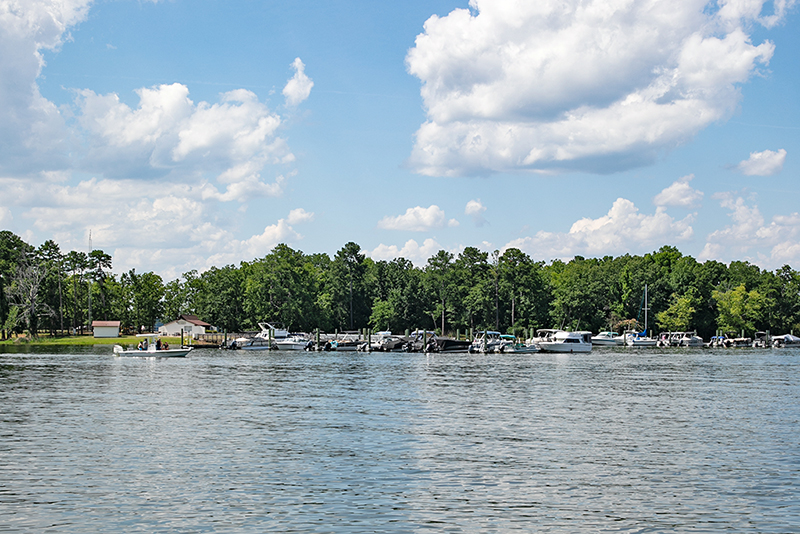
Public Access Points
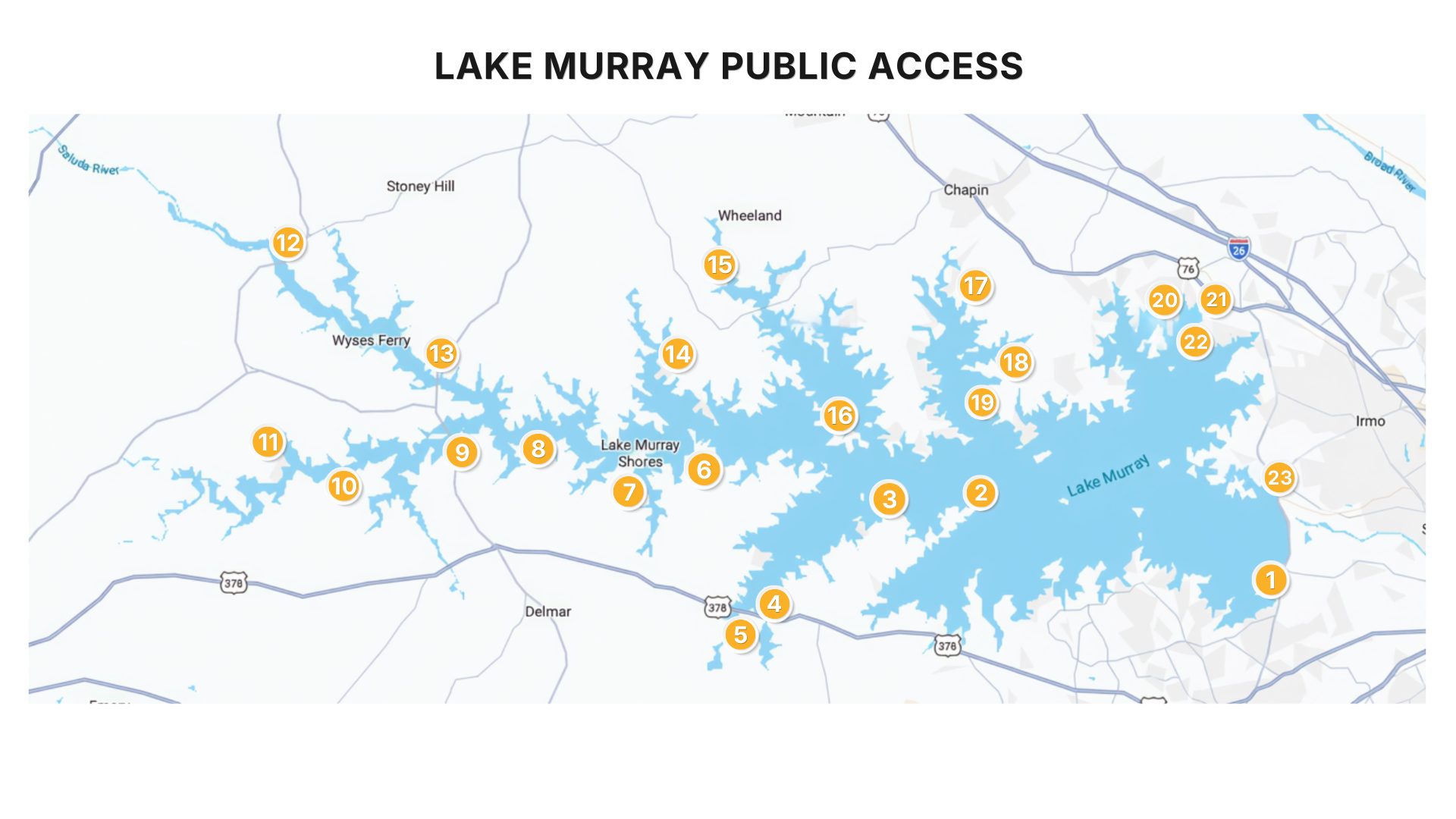
- 1
- 2
- 3
- 4
- 5
- 6
- 7
- 8
- 9
- 10
- 11
- 12
- 13
- 14
- 15
- 16
- 17
- 18
- 19
- 20
- 21
- 22
- 23
- Jake’s Landing
- Siesta Cove Marina
- Koon Landing, Dominion
- South Shore Marina
- Adams Park Boat Ramp
- Ramp 3 Dominion
- Ramp 4 Dominion
- Acapulco Marina
- Big Mans Marina
- Barstow Landing Dominion
- Little Saluda River Retreat
- Kempson Bridge
- Riverwinds Landing
- Martins Landing Marina
- Crayne’s Landing
- Dreher Island, SC PRT
- Eptings Landing
- Putnams Harbor Marina
- Hilton Recreation
- Shealys Landing
- Lighthouse Marina
- Lake Murray Marina
- Lake Murray Dam
- Jake’s Landing
- Siesta Cove Marina
- Koon Landing, Dominion
- South Shore Marina
- Adams Park Boat Ramp
- Ramp 3 Dominion
- Ramp 4 Dominion
- Acapulco Marina
- Big Mans Marina
- Barstow Landing Dominion
- Little Saluda River Retreat
- Kempson Bridge
- Riverwinds Landing
- Martins Landing Marina
- Crayne’s Landing
- Dreher Island, SC PRT
- Eptings Landing
- Putnams Harbor Marina
- Hilton Recreation
- Shealys Landing
- Lighthouse Marina
- Lake Murray Marina
- Lake Murray Dam
Lake Murray Association Water Testing Program
The Lake Murray Association (LMA) has been testing the waters of Lake Murray since 2006. The program was set up to monitor the water quality over time to determine if there are water quality issues that require LMA to take action to keep Lake Murray from deteriorating.
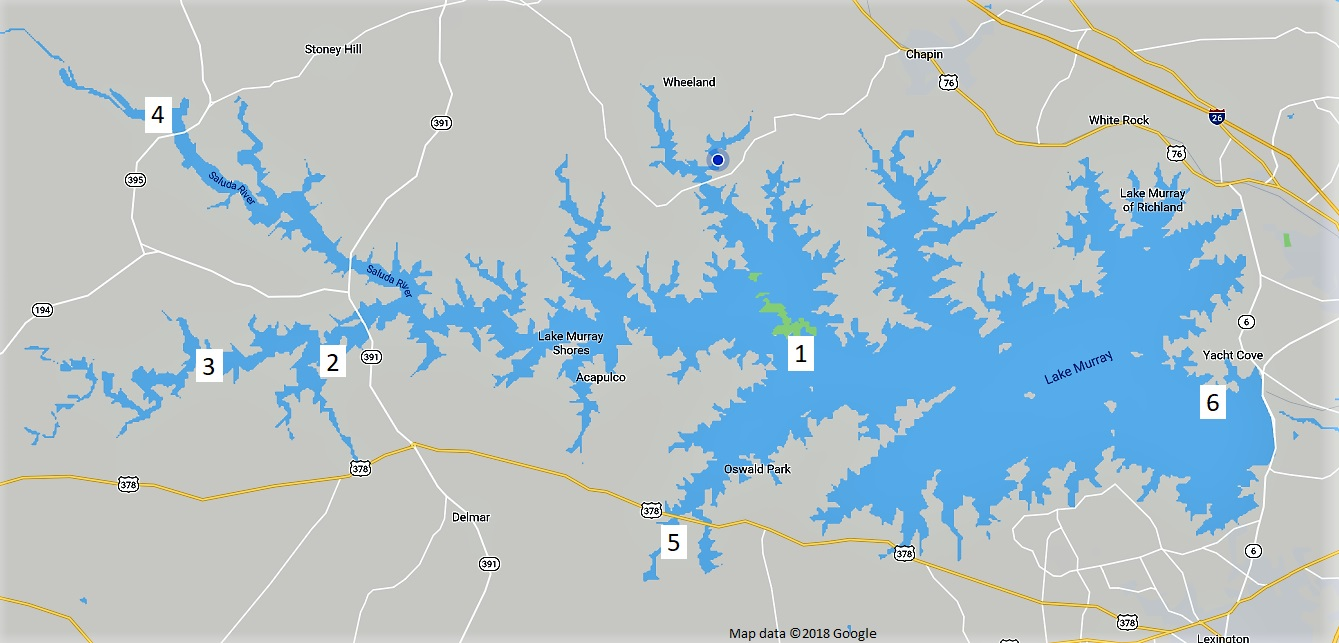
What is involved in the water testing program?
LMA samples five times a year and we are sampling every other month throughout the year. Samples are taken from 6 locations on the lake. At each location two samples are taken, one for total phosphorous levels and one for E. Coli levels. The total phosphorous levels let us monitor the level of nutrients in the water. These nutrients are required by all the plant and animals in the lake; however, when these nutrients become overabundant they promote overgrowth of plants and algae resulting in a lake that is unpleasant to recreate in and potentially toxic. The E. Coli bacteria are monitored because they are considered an indicator species for a group of pathogens associated with waste water and sewage.
Prior to sampling day, the locations to be sampled are determined. This determination takes into account historical sites that we are monitoring for long term changes in the water and current events that need monitoring such as aquatic weed overgrowth, algae blooms or excessive erosion from construction sites.
In preparation for sampling day, containers for the water samples need to be obtained, labeled and chain of custody paperwork filled out.
On sampling day a cooler gets filled with ice to preserve the samples and it is off to the first sampling site. We collect ‘grab’ samples which is dunking a container in the water rinsing it to prevent contamination from the previous sample and refilling the container and pouring the water into the sample bottles. The time of collection is recorded on the chain of custody forms and the samples buried in the ice in the cooler. Then it is on to the next site. Once all the samples are collected they are taken to a certified laboratory and the chain of custody for the samples is signed over to the lab for analysis. After circumnavigating the lake and covering about 120 miles to collect samples, it is time to wait for the results.
Latest Water Quality Report
Licensing Saluda Dam Operations
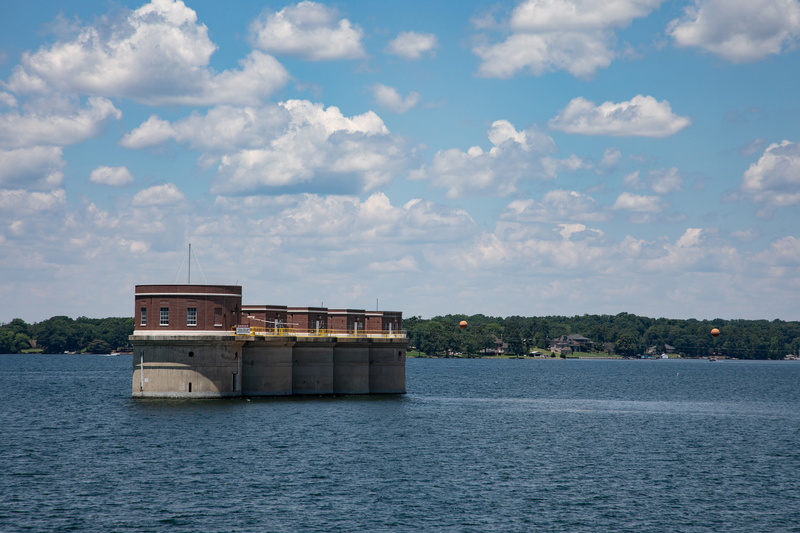
Dominion Energy holds the federal license to operate the Saluda Dam (Lake Murray Dam) and its hydroelectric facility. The dam is federally regulated under the Federal Energy Regulatory Commission (FERC) rather than by the state.
Dominion Energy acquired the dam and the operating license in 2019 when it merged with the original owner, South Carolina Electric & Gas (SCE&G). The multi-decade federal operating license outlines strict mandates for the utility company, including the management of lake levels, downstream water releases, public recreation, and emergency alert sirens.
The relicensing process that Dominion Energy goes through with FERC is the single most important part of the LMA’s responsibilities. In 2010 a license renewal application was submitted to FERC after several years of hard work by all of the stakeholders and Dominion. One stakeholder then issued a concern about the submitted the proposal and unfortunately everything halted until early 2023. Now communication has opened back up and we look forward to seeing the new license be approved in the next year or two.
Shoreline Management
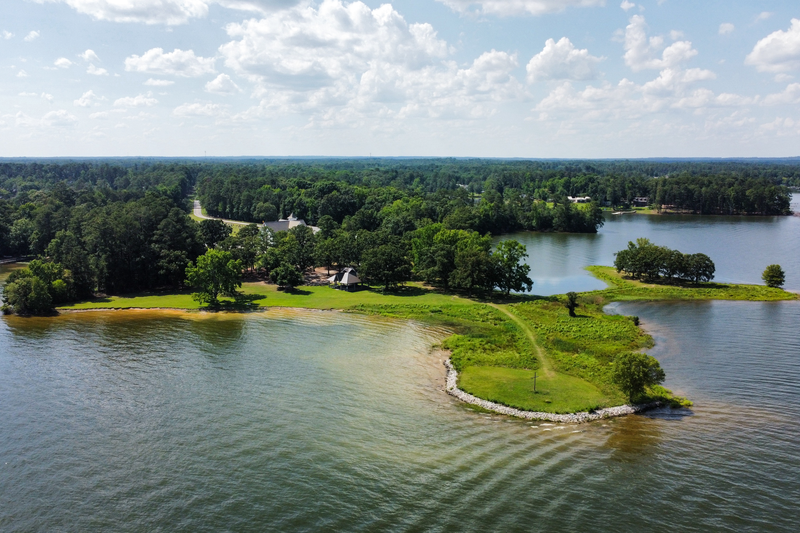
Probably one of the most misunderstood topics on the lake is what exactly shoreline management is. What can and cannot be done around the shore of Lake Murray is mandated by FERC, the Federal Energy Regulatory Commission. They give direction to Dominion Energy Shoreline Management Group.
https://lakemurrayassociation.org/wp-content/uploads/2023/05/291363406_1106940493257005_8264114484597226170_n.jpg
280
451
Jill Kurtz
https://lakemurrayassociation.org/wp-content/uploads/2026/08/lake-murray-association-logo.png
Jill Kurtz2024-11-01 10:56:442026-09-02 16:30:15Dominion Energy Owner’s Dam Safety Program https://lakemurrayassociation.org/wp-content/uploads/2026/08/iStock-1223756177.jpg
1732
1732
Jill Kurtz
https://lakemurrayassociation.org/wp-content/uploads/2026/08/lake-murray-association-logo.png
Jill Kurtz2024-03-01 15:23:242026-09-06 11:16:302023 Annual Report on Water Quality and Aeration Operations at the Saluda Project
https://lakemurrayassociation.org/wp-content/uploads/2026/08/iStock-1223756177.jpg
1732
1732
Jill Kurtz
https://lakemurrayassociation.org/wp-content/uploads/2026/08/lake-murray-association-logo.png
Jill Kurtz2024-03-01 15:23:242026-09-06 11:16:302023 Annual Report on Water Quality and Aeration Operations at the Saluda Project
2024-25 Water Testing Results
Water Quality